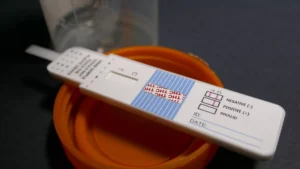
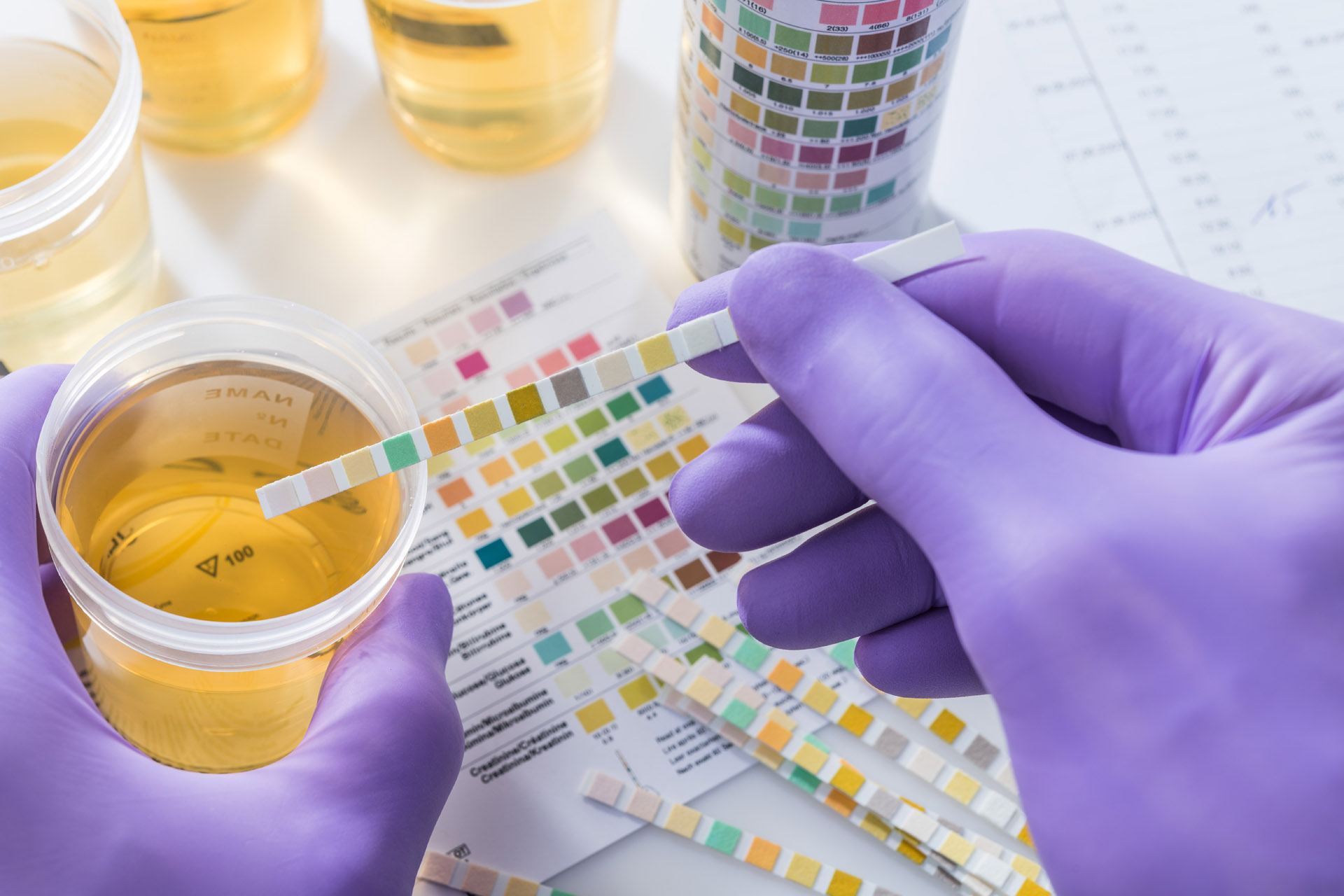
A laboratory urine test strip is a simple and rapid tool for assessing the body’s health status through urine analysis. These narrow, plastic strips have sensitive chemical pads that change color when immersed in urine. Each color change indicates the presence or absence of specific substances like glucose, protein, nitrite, blood, or ketones in the urine.
For example, a urine test strip can easily detect whether an individual has a urinary tract infection or abnormal blood sugar levels. Due to its simplicity, speed, and low cost, this method is one of the most widely used initial diagnostic tools in general medicine and home care. However, for accurate interpretation of results, if abnormal values are observed, consulting a doctor is essential.
Types of Laboratory Urine Test Strips
- Multistix (Multireagent) Urine Test Strip:
This is the most common type of laboratory urine test strip used in general urine tests, capable of simultaneously measuring several parameters. It includes indicators for glucose, protein, ketones, pH, blood, bilirubin, urobilinogen, nitrites, and leukocytes. By dipping the strip in urine and comparing the color change of each section with the color chart on the packaging, results can be obtained qualitatively or semi-quantitatively.
These strips are used in laboratories, clinics, and even at home for general health monitoring. For more accurate interpretation, the results need to be reviewed by a physician.
- Urine Glucose Test Strip:
This laboratory urine test strip is specifically designed to detect the presence of glucose (sugar) in urine and is primarily used in diabetes management. Normally, glucose should not be present in urine, and its presence can indicate high blood sugar levels. Using this strip is simple; just dip it in urine and observe the color change related to glucose.
If glucose levels are high, a specific color (e.g., green or brown) usually appears, indicating the amount. Although its accuracy is lower compared to blood tests, it is very useful for initial screening or daily home monitoring.
- Urine Ketone Test Strip:
This laboratory urine test strip is used to detect the presence of ketones in urine, substances produced from fat metabolism in the body. The presence of ketones in urine may indicate uncontrolled diabetes, a ketogenic diet, or prolonged starvation. This strip helps diabetic individuals understand their body’s metabolic status and prevent dangerous conditions like ketoacidosis.
To use, the strip is dipped in urine, and its color change is compared to a reference chart. If ketones are present in the urine, the strip changes to pink or purple, and the amount of ketones can be estimated based on the color intensity.
- Urine Protein Test Strip:
This strip is designed to check for the presence of protein in urine, which should not normally be seen in urine. The presence of protein can be a sign of kidney problems, such as nephropathy or glomerular damage. Patients with diabetes, high blood pressure, or kidney diseases need frequent monitoring of urine protein levels.
The test strip indicates the presence of protein by a specific color change (usually from yellow to green or blue). These strips are very effective and practical for regular monitoring of kidney function.
How to Use a Laboratory Urine Test Strip
- Prepare Equipment:
- Laboratory urine test strip (Urine dipstick) with a valid expiration date
- Clean and sterile container for sample collection
- Clock or timer for precise timing
- Disposable gloves
- Clean tissue or cloth to remove excess drops
- Collect Urine Sample:
- Collect a midstream clean catch urine sample in a sterile container.
- Preferably, collect the sample in the first hours of the morning, as it is more concentrated and yields more accurate results.
- The sample should be tested within 2 hours or refrigerated.
- Prepare Test Strip:
- Remove the strip from its original container and immediately close the lid (air humidity spoils the strips).
- Handle the strip with clean hands or using forceps.
- Avoid touching the chemical pads on the strip.
- Perform Test:
- Completely immerse the strip in urine for 1 to 2 seconds.
- Immediately remove the strip and tap its edge against the container to remove excess urine.
- Place the strip horizontally on a clean tissue or the edge of the container (not vertically).
- Read Results:
- Read the results for each parameter according to the time specified on the box or brochure.
- For example: Leukocytes (60 seconds), Nitrites (30 seconds), Protein and Glucose (60 seconds), etc.
- Place the strip against the color chart on the package and match the color of each pad.
- Accurate timing is key to correct results. Reading results too early or too late will lead to test error.
Important Safety and Precautionary Notes for Laboratory Use:
- Avoid using moist or expired laboratory urine test strips.
- Store strips in their original container, in a dry and cool environment (not in the refrigerator).
- Do not leave the strip in urine for too long, as it will dissolve the chemical reagents.
- Do not place the strip on a contaminated surface.
- If unusual results are observed, the test should be repeated, and the sample sent to a specialized laboratory.
- Test strip results should always be interpreted in conjunction with the patient’s clinical symptoms and supplementary tests.
How to Read Urine Test Strip Parameters
| Parameter | Usual Interpretation | What it Might Indicate? |
| pH | 4.5 – 8 | Acidity or alkalinity of urine; high levels may indicate urinary tract infection. |
| Protein | Negative | Presence of protein may indicate kidney damage. |
| Glucose | Negative | Positive may indicate uncontrolled diabetes. |
| Ketones | Negative | Positive may indicate diabetic ketoacidosis or starvation. |
| Blood | Negative | Presence of blood may be due to infection, kidney stones, or trauma. |
| Leukocytes (WBC) | Negative | Indicates urinary tract infection or inflammation. |
| Nitrites | Negative | Positive usually means the presence of specific bacteria in urine. |
| Urobilinogen | Small amounts are normal | Increased levels may indicate liver disease. |
| Bilirubin | Negative | Positive may indicate liver or bile duct problems. |
| Specific Gravity | 1.005 – 1.030 | Urine concentration; provides information about body hydration. |
If abnormal results are observed, it is best to re-examine the sample and, if necessary, perform more specialized tests.
Purchasing Laboratory Equipment from Arya Mabna Tashkhis
Arya Mabna Tashkhis is a reputable supplier of laboratory supplies in Iran that offers high-quality products. Purchasing from Arya Mabna Tashkhis includes receiving expert consultation, guarantee of product authenticity, and technical after-sales support. Orders can be placed by directly contacting sales experts. The company also has extensive collaborations with medical centers, hospitals, and private laboratories.