Laboratory equipment comprises a set of specialized tools and devices used for precise experiments, chemical, physical, biological, and research analyses in controlled environments. These pieces of equipment play a key role in ensuring the accuracy of laboratory results, increasing the efficiency of research processes, and adhering to safety and quality standards.
Depending on the type of laboratory—whether chemistry, biology, medicine, pharmacy, or physics—the type and application of the equipment vary. Accurate knowledge of these pieces of equipment and their proper functioning is an essential prerequisite for achieving valid and safe results in any professional laboratory.
15 Essential Laboratory Equipment and Their Applications in Scientific Research
1. Micropipette
A micropipette is a precise tool for aspirating specific, very small volumes of liquids (usually between 0.1 and 1000 microliters). Its design includes a piston, a replaceable plastic tip, and a volume adjustment mechanism. The high accuracy of the micropipette in measuring liquids is crucial, especially in molecular, genetic, and biochemical assays. Improper use of a micropipette can increase experimental error, making regular calibration essential.
Application: Used for precise liquid handling in microliter volumes in PCR, ELISA, and molecular analyses.
| Criterion | Description |
| Medical Use | Precise aspiration of low-volume (microliter) biological fluids |
| Sample Type | Serum, plasma, DNA, RNA, enzyme reagents |
| Applied Specialties | Genetics, immunology, biochemistry, hematology |
| Key Point | Never hold a micropipette horizontally when the tip contains liquid. This can cause liquid to enter the pipette body and contaminate it. |
2. Culture Media
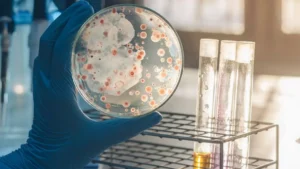
Culture media are nutrient-rich substrates used for the growth, proliferation, and study of microorganisms. These media can be solid (e.g., agar) or liquid (e.g., broth). The composition of culture media varies depending on the type of microbe being studied. Some media are general, while others are selective. Sterile conditions and appropriate temperature are crucial for using culture media.
Application: For growing bacteria, fungi, or cells under controlled conditions in microbiology laboratories.
| Criterion | Description |
| Medical Use | Growth and identification of pathogenic microorganisms or human cells |
| Sample Type | Blood samples, secretions, urine, tissue samples |
| Applied Specialties | Medical microbiology, virology, bacteriology, cell pathology |
| Key Point | The type of culture medium selected should be based on the target organism (selective or general). |
3. Spectrophotometer
This type of laboratory equipment is used to measure the intensity of light absorption by solutions at a specific wavelength. Its operation is based on the passage of light through the sample and the measurement of the intensity of the transmitted light. This information is critical for analyzing material concentrations and studying chemical reactions. Accurate calibration and proper filter or lamp selection are key factors in result accuracy. UV-Visible spectrophotometers are the most common type in laboratories.
Application: Measuring DNA, protein concentrations, and assessing reaction rates in biochemical analyses.
| Criterion | Description |
| Medical Use | Measuring concentrations of biological substances like proteins, DNA, enzymes |
| Sample Type | Serum, plasma, colored solutions, or reactive solutions |
| Applied Specialties | Clinical biochemistry, pathobiology, hematology, pharmacology |
| Key Point | Selecting the appropriate wavelength is essential for greater accuracy in analysis. |
4. Centrifuge
A centrifuge is a device that separates different components of a sample based on their density by spinning them at high speeds. Sample tubes are placed at a specific angle, and as they spin, components are pulled toward the bottom of the tube. Centrifuges come in various types (micro, benchtop, refrigerated). Temperature, speed, and spin duration control are very important to prevent sample degradation.
Application: Separating cells, plasma, DNA, protein precipitates, and other components of biological solutions.
| Criterion | Description |
| Medical Use | Separation of cellular components, DNA/RNA extraction, precipitation of sediments |
| Sample Type | Whole blood, urine, cerebrospinal fluid, cell cultures |
| Applied Specialties | Medical genetics, hematology, biochemistry, blood banking |
| Key Point | Precise balancing is essential to prevent vibration and damage to the device. |
5. Laminar Flow Hood
A laminar flow hood is a device with a unidirectional filtered airflow used to create a contamination-free environment when performing contamination-sensitive experiments. Filtered air passes through a HEPA filter and flows uniformly across the work surface. Its use is essential for working with cell cultures and live cells.
Application: Protecting samples in microbiological and cell culture experiments from environmental contamination.
| Criterion | Description |
| Medical Use | Protecting samples from environmental contamination during culture or sensitive experiments |
| Sample Type | Culture media, living cells, bacteria, viruses |
| Applied Specialties | Biosafety, cell culture, immunology, virology |
| Key Point | The device should not be used to protect the user from toxic materials (unlike a chemical fume hood). |
6. Incubator
An incubator is a device that provides controlled environmental conditions such as temperature, humidity, and sometimes gas for the growth of living organisms. Typically, a temperature of 37°C is used for the growth of bacteria and human cells. Different incubator models offer features like CO₂ control, controlled humidity, and internal shakers.
Application: Growth and proliferation of microorganisms, human or animal cells in laboratory settings.
| Criterion | Description |
| Medical Use | Growing cells or microorganisms at a controlled temperature |
| Sample Type | Human cell cultures, pathogenic microbes, blood culture samples |
| Applied Specialties | Virology, cell biology, tissue culture, microbiology |
| Key Point | Humidity and CO₂ control are vital for mammalian cell growth. |
7. Hot Plate
A hot plate is a piece of laboratory equipment used for gradually heating solutions or samples. This device can create a uniform temperature across its surface. Some models also include a built-in magnetic stirrer for simultaneous mixing of solutions. Prolonged use requires temperature monitoring to prevent evaporation or sample degradation.
Application: Heating chemical solutions, performing exothermic reactions, and stirring solutions in controlled reactions.
| Criterion | Description |
| Medical Use | Gentle heating of solutions for dissolution, homogenization, or chemical reactions |
| Sample Type | Biochemical reagents, culture media, staining solutions |
| Applied Specialties | Pathology, clinical chemistry, medical biochemistry |
| Key Point | Careful temperature control prevents burning or unauthorized evaporation. |
8. pH Meter
A pH meter is an electronic device for measuring the acidity or alkalinity of a solution. This device consists of a hydrogen ion-sensitive electrode and a digital display. High accuracy and regular calibration with standard solutions are essential to ensure measurement accuracy.
Application: Determining pH in chemical, biological, agricultural, pharmaceutical, and food production experiments.
| Criterion | Description |
| Medical Use | Measuring the acidity of media for biochemical analysis or cell culture adjustment |
| Sample Type | Culture media, biological fluids, serum, plasma |
| Applied Specialties | Biochemistry, pharmacology, cell culture, medical nutrition |
| Key Point | Must be calibrated with standard buffer solutions before use. |
9. Light Microscope
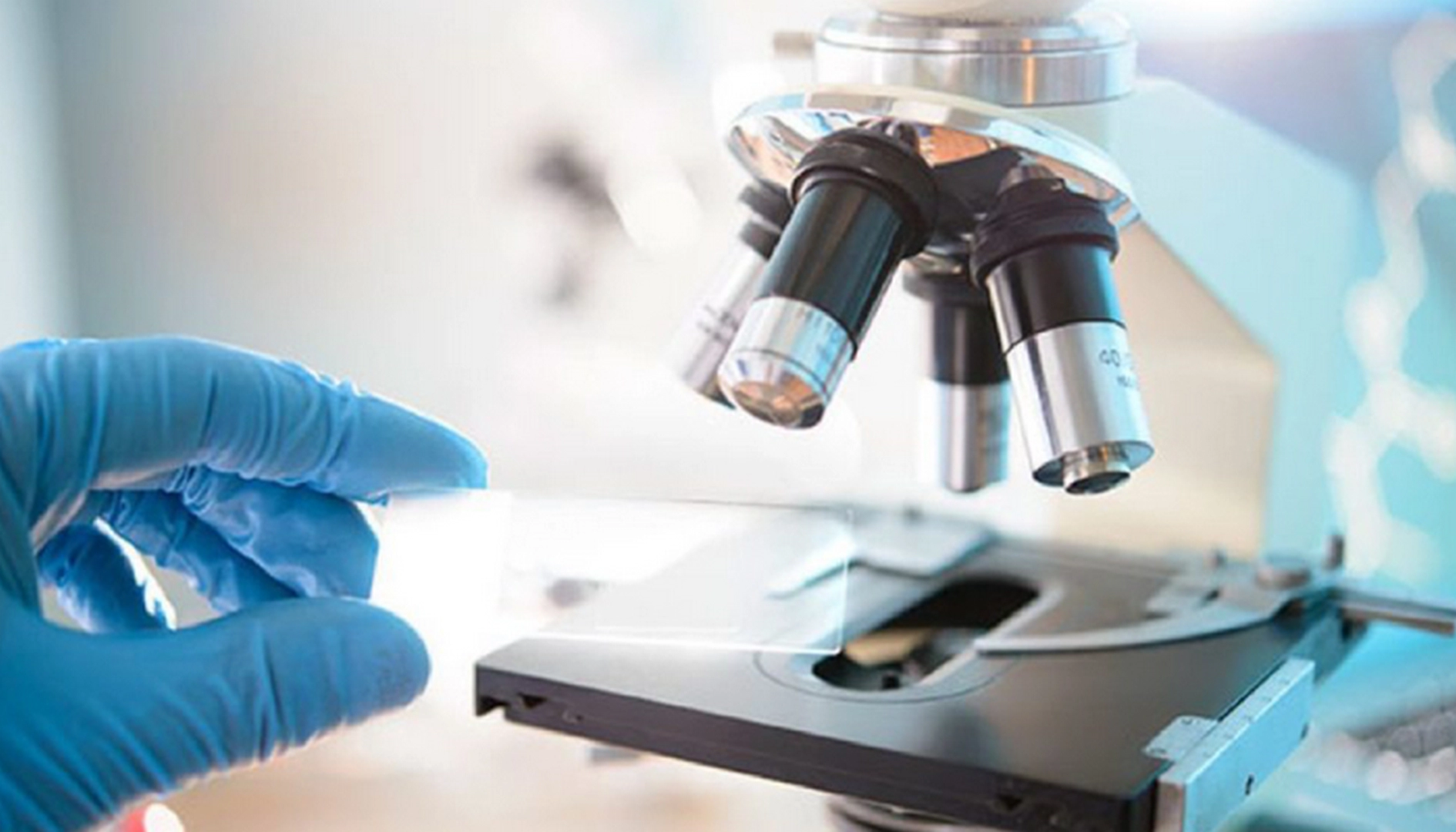
A light microscope is a type of laboratory equipment used for observing very small samples, such as cells and bacteria, which are not visible to the naked eye. This device uses lenses and visible light to provide magnifications of up to approximately 1000 times. Advanced types (fluorescence microscopes) are also used for specialized imaging.
Application: Examining tissues, cells, and microscopic structures in biology, pathology, and microbiology.
| Criterion | Description |
| Medical Use | Observing cell and tissue structure, bacteria, and parasites |
| Sample Type | Blood smears, tissue sections, stained samples |
| Applied Specialties | Pathology, hematology, parasitology, histology |
| Key Point | Use of specific stains like Giemsa or hematoxylin is necessary to enhance clarity. |
10. Analytical Balance
A digital balance is one of the most accurate laboratory equipment for mass measurement, capable of weighing up to 0.0001 grams (0.1 milligrams). This device is enclosed in a draft shield to prevent the influence of airflow, ambient temperature, or vibrations. High accuracy and repeatability in mass measurement make this tool a crucial component in quantitative analysis. For proper use, the device’s surface must be level, calibrated, and free of moisture and dust.
Application: For precise weighing of chemical, pharmaceutical, and biological samples in quantitative analyses and formulation.
| Criterion | Description |
| Medical Use | Precise weighing of pharmaceutical materials, reagents, biochemical compounds |
| Sample Type | Solid materials, powders, dry samples |
| Applied Specialties | Pharmacy, drug quality control, biochemistry, hematology |
| Key Point | Weighing must be performed in an environment free of vibration, airflow, or heat. |
11. Burette & Pipette
Burettes and pipettes are key laboratory equipment for volumetric analysis and reactions. Pipettes are used for precise transfer of specific volumes of solutions and come in manual, automatic, and macro types. Burettes, which are fixed on a stand, are used for titration and dropwise addition of solutions with high accuracy. Both tools require cleaning, calibration, and careful reading of volumes. Their glass or plastic material is chosen based on the type of substance being used.
Application: In titration experiments, determining solution concentrations, and quantitative volumetric reactions in chemistry and biochemistry.
| Criterion | Description |
| Medical Use | Titration of solutions, precise volumetric measurement for clinical reactions |
| Sample Type | Acids, bases, reagents, chemical solutions |
| Applied Specialties | Biochemistry, pharmaceutical chemistry, clinical analysis |
| Key Point | High precision and correct technique in use reduce error in results. |
12. Water Bath
A water bath is a device used to provide uniform heat to liquid samples or laboratory vessels. This system transfers the desired temperature to the sample through hot water, preventing direct heating. Many water bath models have digital temperature control, timers, and thermal protection. Using distilled water is recommended to prevent mineral deposits. In some cases, oil can be used instead of water for higher temperatures.
Application: For enzyme incubation, temperature-dependent reactions, and melting sensitive biological materials.
| Criterion | Description |
| Medical Use | Controlled heating of samples or enzyme incubation at stable temperatures |
| Sample Type | Enzymes, serum, buffer solutions |
| Applied Specialties | Biochemistry, virology, immunology |
| Key Point | Using distilled water is recommended to prevent scale buildup. |
13. Chromatography System
Chromatography is an advanced method for separating, identifying, and quantifying components of a compound. This technique works based on the difference in the migration rate of various components in a mobile phase (e.g., solvent) and a stationary phase (e.g., column). This type of laboratory equipment is used for analyzing complex compounds in chemical, biological, and pharmaceutical industries. Associated equipment such as detectors, pumps, and columns play a key role in performance accuracy.
Application: Detecting impurities, separating active compounds, and quality control of pharmaceutical and chemical products.
| Criterion | Description |
| Medical Use | Separation, identification, and quantification of complex compounds in biological samples |
| Sample Type | Plasma, urine, drugs, metabolic compounds |
| Applied Specialties | Pharmacology, biochemistry, clinical toxicology |
| Key Point | Requires a trained operator and proper selection of mobile and stationary phases. |
14. Laboratory Freezer
A laboratory freezer is designed for long-term storage of samples that are sensitive to very low temperatures. These devices can cool down to -20, -40, or even -80 degrees Celsius. Their design typically includes strong insulation, complete sealing, and a temperature alarm system. Maintaining temperature stability and preventing fluctuations is vital for proper storage of biological materials. Freezers are used in clinical research, genetics, and biological banks.
Application: For storing biological samples, enzymes, antibodies, vaccines, and RNA/DNA at very low temperatures.
| Criterion | Description |
| Medical Use | Long-term storage of heat-sensitive samples like vaccines and RNA |
| Sample Type | Biological samples, antibodies, proteins |
| Applied Specialties | Genetics, immunology, molecular medicine |
| Key Point | Temperature monitoring with an alarm system is crucial for sample integrity. |
15. Fume Hood
A fume hood is another essential piece of laboratory equipment for ventilating toxic vapors, gases, and chemicals. This device prevents users from inhaling hazardous substances by drawing air from inside the cabinet and filtering it or expelling it outdoors. Its internal surface must be resistant to corrosive materials, and proper filter maintenance ensures its correct functioning. Simultaneous use of a fume hood and PPE (Personal Protective Equipment) is recommended in hazardous environments.
Application: Performing chemical reactions with corrosive, toxic, or volatile materials in a safe and controlled environment.
| Criterion | Description |
| Medical Use | Protecting the user from toxic vapors and gases while working with hazardous materials |
| Sample Type | Corrosive materials, acids, bases, organic solvents |
| Applied Specialties | Pharmacology, chemotherapy, chemical analysis |
| Key Point | Regular filter replacement and airflow inspection are essential for safe operation. |
Aria Mabna Tashkhis Company
Aria Mabna Tashkhis Company, leveraging new technologies, supplies laboratory consumables produced in accordance with international ISO and CE standards. By offering high-quality domestic products, this company covers a wide range of specialized laboratory needs. Expert consultation, valid warranty, and professional after-sales services are among the other advantages of purchasing from this company. The scientific and technical support provided by this company has led many treatment and research centers to become its loyal customers.