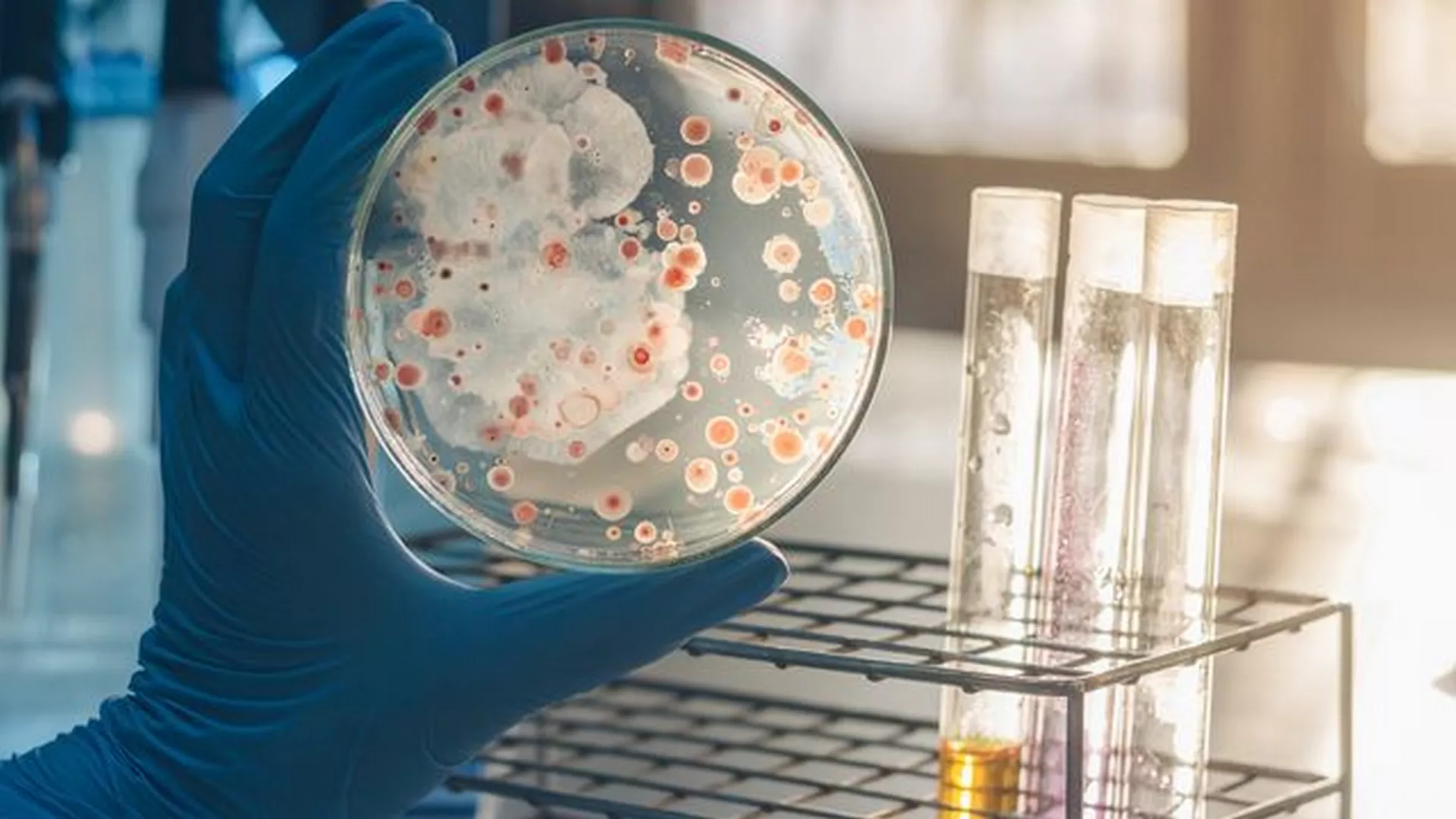
A culture medium is a combination of nutrients and other substances that provides the necessary conditions for the growth, multiplication, and maintenance of microorganisms, plant, animal, or human cells under controlled conditions. The precise design of a culture medium aims to meet the metabolic needs of the target organisms and can include sources of carbon, nitrogen, vitamins, minerals, growth factors, and pH-regulating buffers.
Depending on the application, culture media are divided into various types such as solid, liquid, and semi-solid media, and are used in numerous fields including microbiology, biotechnology, cell culture, and the production of biopharmaceuticals. The correct selection of a culture medium directly impacts research and industrial results and can enable the selective growth or differentiation of specific types of cells or microbes. Today, with advancements in biotechnology, specialized and combined culture media have been developed that significantly help optimize culture processes at laboratory and industrial scales.
Common Culture Medium Ingredients
| Ingredient | Role and Application in Culture Medium |
| Peptone | Source of carbon and nitrogen for microorganism growth |
| Beef extract | Rich source of essential amino acids, vitamins, and minerals |
| Yeast extract | Provides vitamins, carbon, and nitrogen to improve cell growth |
| Distilled water | Main solvent for dissolving medium components and providing necessary moisture, and a source of hydrogen and oxygen |
| Agar | Solidifying agent for the culture medium to provide a surface for growth |
Culture Medium Preparation Process
1. Selecting the Type of Culture Medium
In the first step, the type of culture medium suitable for the experimental goal must be selected. Culture media can be general-purpose, selective, or differential, depending on the target microorganism or cell. For example, nutrient agar is a common solid medium for culturing and isolating a wide range of microorganisms, while Sabouraud Dextrose Agar is used for fungi, yeasts, and filamentous bacteria. Correct medium selection directly impacts growth, proliferation, and final experimental results. At this stage, attention to the medium’s formulation is very important.
2. Weighing the Ingredients
After selecting the appropriate culture medium, its constituent ingredients must be accurately weighed according to standard instructions. These ingredients typically include peptone, beef extract, yeast extract, salts, agar, and other special additives. Accuracy in weighing materials helps ensure the proper function of the culture medium and prevents laboratory errors. A precise laboratory balance is used for this purpose. The weight of the ingredients must be calculated based on the desired amount of medium (e.g., one liter).
3. Dissolving Ingredients in Distilled Water
After weighing, the ingredients are dissolved in a specified volume of clean, contamination-free distilled water. To facilitate dissolution, the solution should be stirred gently and heated if necessary. The use of distilled water is essential to prevent the introduction of mineral or microbial impurities. Some media may require more time for complete dissolution. At this stage, it must be ensured that no solid particles remain in the solution.
4. Adjusting the Medium’s pH
Given that pH is one of the important factors for differentiating various microorganisms, adjusting the culture medium’s pH is one of the sensitive steps in preparation, which must be done before sterilization.
For example, in Sabouraud Dextrose Agar culture medium, acidic pH (around 5) prevents bacterial growth and allows the growth of yeasts and filamentous fungi. This makes this culture medium considered a selective culture medium.
However, usually the pH of culture media is adjusted to a neutral or slightly alkaline range (around 7.0). Dilute acid solutions (like HCl) or base solutions (like NaOH) are used to adjust the pH. Incorrect pH can inhibit microorganism growth or produce inaccurate results. The use of a calibrated pH meter is mandatory at this stage.
5. Sterilizing the Culture Medium
After pH adjustment, the culture medium must be sterilized to eliminate all unwanted microorganisms. Sterilization is usually done using an autoclave at 121°C and 15 PSI pressure for 15 to 20 minutes. This process ensures the culture medium is free of any contamination and safe for laboratory cultures. If heat-sensitive components are to be added, these materials are added after the medium has been sterilized. Strict adherence to sterilization principles is vital to prevent experimental contamination.
6. Pouring the Medium into Plates or Suitable Containers
After sterilization, and when the culture medium’s temperature reaches about 45-50°C, it should be poured into Petri dishes or suitable culture containers. Pouring the medium must be done under sterile conditions, such as under a laminar flow hood or next to a flame. The appropriate thickness of the medium in the plates is important to ensure uniform growth of microorganisms. After pouring, the medium must be allowed to solidify completely. Finally, the plates or containers should be stored at an appropriate temperature to be ready for culture.
What is a Defined Culture Medium?
A defined culture medium is a medium in which all chemical components and the exact quantities of each component are known and specified. In this type of medium, the researcher knows exactly what nutrients are present in the medium and at what concentrations. These media are usually made from pure substances such as glucose, inorganic salts, and specific amino acids.
Defined media are ideal for studies of cellular metabolism, investigation of nutritional requirements, and genetic research. Using this medium allows researchers to evaluate the precise effect of each nutrient on the growth of the target cell or microorganism. Since all components are known, experimental results will be more repeatable and amenable to precise analysis. These media are often used in basic research or biotechnology projects. Their preparation requires high precision in weighing materials and controlling conditions.
| Components | Precisely known |
| Application | Metabolic, genetic, biotechnology research |
| Advantage | Precise analysis of each substance’s effect |
| Disadvantages | May not be suitable for the growth of some microorganisms that require unknown growth factors. |
| Sample Defined Medium | M9 medium, Minimal Salts medium |
| Preparation Accuracy | Very high |
| Cost | Relatively high |
What is an Undefined Culture Medium?
An undefined culture medium is a medium whose exact composition is not precisely known and usually contains natural materials such as beef extract or yeast extract. In this medium, the exact quantities of chemical components such as amino acids, sugars, and vitamins are unknown. Undefined media are often used for faster and better growth of a wide range of microorganisms.
These media are suitable for general cultures, large-scale cell production, and non-research work. Since natural components are used, these media are biologically richer but have lower scientific precision. Their preparation is simpler and more economical than defined media. However, they are less useful in precise metabolic analyses.
| Components | Natural, undefined components |
| Application | General culture, rapid growth |
| Advantage | Easy and inexpensive preparation |
| Disadvantages | Unsuitable for precise metabolic studies, less reproducibility than defined media |
| Sample Undefined Medium | Nutrient Agar, Sabouraud Dextrose Agar |
| Preparation Accuracy | Moderate |
| Cost | Low |
What is a Complex Culture Medium?
A complex culture medium is a type of undefined culture medium that contains a rich and varied mixture of natural ingredients. In this medium, substances such as peptone, beef extract, yeast extract, and casein are present in combination, leading to faster and stronger growth of fastidious or specific microorganisms.
Since the exact composition of complex media is not known, they are not suitable for sensitive scientific investigations, but they are widely used for general growth, antibiotic production, industrial processes, and diagnostic tests like antibiotic susceptibility testing. Due to their high nutritional richness, these media better meet complex cellular needs. Often, hospital or environmental microbes are cultured in such media. Preparing complex media is usually simpler, but standardizing results will be more difficult. These media are widely used in biological industries due to their high flexibility in culture conditions.
| Components | Complex combination of natural sources |
| Application | Culturing specific microbes, industrial production |
| Advantage | Faster growth, more complete nutrition |
| Disadvantages | Low reproducibility, unsuitable for precise metabolic studies. May contain inhibitors. |
| Sample Complex Medium | LB medium (Luria Bertani), BHI medium |
| Preparation Accuracy | Relatively easy |
| Cost | Moderate |
Types of Culture Media Based on Consistency/Physical State
Solid Medium
A solid culture medium is made by adding a solidifying agent like agar to a liquid medium, usually at a concentration of about 1.5%. Due to its high consistency, this medium allows for the isolation and identification of microbial colonies. Solid media are used for checking sample purity, isolating different species, and antibiotic testing. After sterilization and pouring into Petri dishes, this medium solidifies at room temperature. Solid media are widely used due to the ease of observing colony shape, size, and color.
These media are often used in clinical and research microbiology laboratories. Physical separation of microbes is possible in this medium. Examples of solid media include Nutrient Agar and Sabouraud Dextrose Agar.
| Consistency | Solid |
| Solidifying Agent | Agar (1.5%) |
| Primary Application | Isolation and identification of colonies |
| Sample Medium | Nutrient Agar, Sabouraud Dextrose Agar |
| Advantage | Direct observation of colonies |
Semi-Solid Medium
A semi-solid medium has a lower agar concentration, usually around 0.3 to 0.5%, which creates a softer, gel-like structure. These media are dense enough to slow down cell movement but still allow migration. They are mostly used to study the motility of microorganisms and the growth of aerobic and anaerobic bacteria.
Bacterial migration in a semi-solid medium creates specific growth patterns. This medium is usually prepared in culture tubes and does not require flat plates. Semi-solid media are sensitive to environmental conditions and must be stored carefully. The ability to understand cell motility under laboratory conditions is very valuable.
| Consistency | Semi-solid |
| Solidifying Agent | Agar (0.3–0.5%) |
| Primary Application | Studying cell motility and migration |
| Sample Medium | SIM medium |
| Advantage | Detecting microbial motility |
Liquid Medium
A liquid culture medium, also known as broth medium, lacks any solidifying agent like agar. This medium is used for mass growth of microorganisms, preparing cultures for DNA or protein extraction, and vaccine production. In liquid medium, microbes grow in suspension, allowing for easy collection for various analyses.
To prepare liquid medium, only nutrient components are dissolved in distilled water and used after sterilization. It is typically used for large-scale cultures or experiments requiring high biomass. The growth rate of microorganisms in liquid medium is higher than in solid medium. Examples of liquid media include Nutrient Broth and Tryptic Soy Broth (TSB).
| Consistency | Liquid |
| Solidifying Agent | None |
| Primary Application | Mass growth of microorganisms |
| Sample Medium | Nutrient Broth, Tryptic Soy Broth |
| Advantage | Easy cell collection |
Classification of Culture Media by Application and Composition
| Type of Culture Medium | Primary Application | Main Ingredients |
| General Purpose Media | Growth of a wide range of microorganisms | Peptone, beef extract or yeast extract, salts |
| Selective Media | Selective growth of a specific group of microorganisms and inhibition of others | Nutrients + inhibitory agents (e.g., antibiotics) |
| Differential Media | Distinguishing biochemical differences between microorganisms | Nutrients + pH indicators or biochemical reagents |
| Enriched Media | Growth of fastidious microorganisms or those requiring special substances | Base medium + blood, serum, or special growth factors |
| Reducing Media | Growth of anaerobic microbes | Reducing agents (e.g., sodium thioglycolate), peptone, distilled water |
| Specialized Media | Specific tests, genetic research, or industrial production | Specific selective ingredients, defined or complex media |
Culture Medium; A Bridge Between Research and Scientific Advancement
Culture medium, as the primary substrate for the growth and study of microorganisms, plant, and animal cells, plays an indispensable role in the advancement of biological and medical sciences. The correct selection of the medium type, based on nutritional needs and desired physical conditions, is of high importance for the accuracy of laboratory results. Today, many culture media serve as a basis for the more precise performance of tools such as ELISA kits and rapid diagnostic kits, which play a vital role in immunology studies, identifying pathogens, and investigating biological responses.
Given the diversity of culture media in terms of composition, application, and physical state, a correct understanding of each medium’s characteristics is essential for designing accurate experiments and utilizing modern diagnostic kits. Recent advancements in the formulation of specialized and defined media enable a more precise investigation of cellular behavior and metabolic processes, alongside sensitive detection methods. Ultimately, the continuous development of customized culture media compatible with new technologies has paved new paths for scientific research, vaccine production, disease treatment, and the expansion of biotechnology. Adherence to standards for preparation, sterilization, and selection of appropriate components is key to success in all scientific projects related to culture media, especially when used with advanced diagnostic kits.