Laboratory Glassware and Labware
Laboratory glassware and labware are fundamental components of any medical laboratory. These tools play a crucial role in performing accurate, safe, and repeatable experiments. From measuring and mixing solutions to storing samples and carrying out chemical reactions, using the right, high-quality containers ensures the precision and validity of results.
Importance and Applications of Laboratory Glassware and Labware in Medicine
Laboratory glassware and labware are vital in medicine and are used in laboratories for several reasons. Below, we’ll highlight some of their most important applications and characteristics:
- Transparency for Accurate Observation
The transparency of laboratory glassware and labware allows for direct and accurate observation of chemical reactions and physical changes. This feature enables researchers to visually monitor processes and take corrective actions if necessary. Additionally, glass transparency helps detect contaminants or precipitates within containers.
- High Thermal Resistance
Glass used in laboratories, such as borosilicate glass, has high resistance to heat and thermal shock. This property allows them to be used in processes like heating, boiling, or autoclaving without the risk of cracking or breaking.
- Chemical Inertness
Laboratory glassware and labware are inert to many chemicals, meaning they do not react with the substances inside them. This property prevents cross-contamination and increases the accuracy of test results. It also makes glassware suitable for storing sensitive or reactive solutions.
- Ease of Cleaning and Sterilization
The smooth, non-porous surface of laboratory glassware and labware makes them easy to clean and sterilize. This feature is crucial for maintaining hygiene and preventing cross-contamination in medical laboratories. Furthermore, many types of glassware can withstand sterilization processes like autoclaving.
- Variety in Design and Application
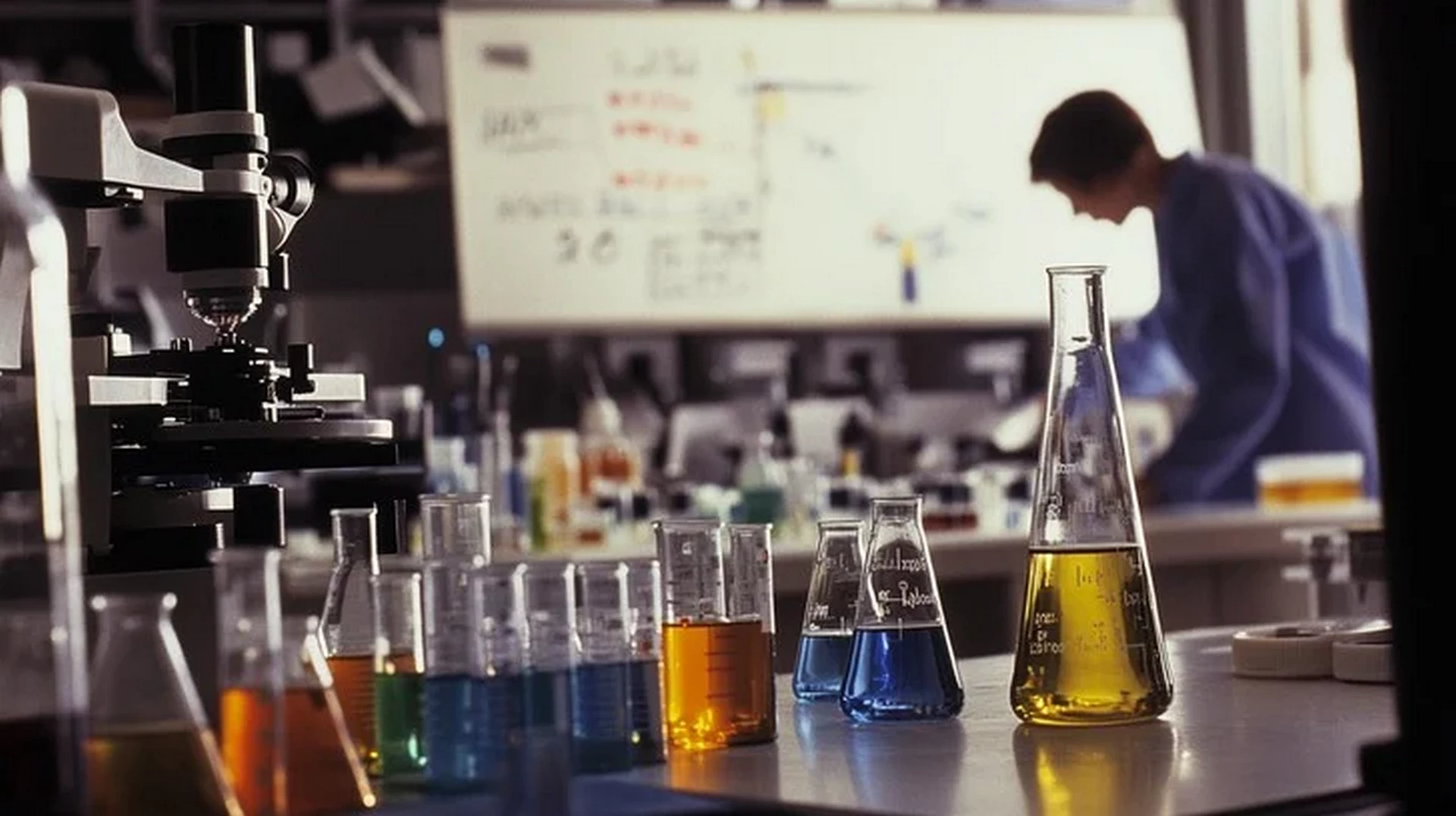
Laboratory glassware and labware are produced in various shapes and sizes to meet different laboratory needs. From beakers and flasks for mixing and heating solutions to test tubes for holding small samples, each of these tools is designed for a specific application. This variety allows researchers to choose the appropriate tool for each process.
- Durability and Long Lifespan
High-quality laboratory glassware and labware, such as borosilicate glass, have high durability and a long lifespan. This feature ensures that these instruments can withstand repeated use and harsh laboratory conditions, which in turn reduces maintenance and replacement costs.
Given the above features, laboratory equipment is considered essential and irreplaceable in medical laboratories. Proper use and maintenance of these tools can help improve the quality and accuracy of test results.
Common Types of Laboratory Glassware and Labware
In medical laboratories, glassware and labware play a critical role in performing accurate and safe experiments. Below, we introduce some of the most commonly used glassware and labware in laboratories and their applications:
- Beaker
A beaker is a cylindrical container with a flat bottom and a wide mouth, often with a pouring spout. It is used for heating, dissolving, and mixing solutions, as well as for transferring liquids and performing chemical reactions. Beakers are available in various sizes (e.g., 250cc, 600cc, 1000cc, etc.).
- Erlenmeyer Flask
An Erlenmeyer flask is a conical-shaped container with a narrow neck, used for mixing and heating solutions. Its specific shape reduces evaporation and prevents splashing of liquids during swirling. Erlenmeyers are produced in various types, such as vacuum flasks and graduated flasks.
- Graduated Cylinder
A graduated cylinder, or measuring cylinder, is a tall, narrow tube with a base used for precise measurement of liquid volumes. Its body has graduated markings in milliliters or cubic centimeters. Graduated cylinders are made in various volumes from a few milliliters to several liters.
- Pipette
A pipette is a device used to draw a specific volume of liquid and transfer it to another container. Pipettes are produced in various types, such as volumetric pipettes and graduated pipettes. Bulbs or pipette fillers are typically used to fill pipettes.
- Burette
A burette is a long, graduated tube with a stopcock at the bottom, used for precise measurement and transfer of liquid volumes, especially in titrations. Burettes are usually made of glass and have markings from top to bottom. Various types of burettes exist, such as those with stopcocks and digital burettes.
- Round Bottom Flask
A round bottom flask is a spherical container with a narrow neck used for boiling and distilling liquids. Its spherical shape ensures uniform heat distribution. Round bottom flasks are available in various volumes such as 250cc, 600cc, 1000cc, and so on.
- Test Tube
Test tubes are among the most commonly used containers in any medical laboratory. They are used for holding, mixing, or heating small volumes of liquid. These tubes are typically made of heat-resistant glass and come in plain or stoppered varieties. Their sizes vary and are selected based on experimental needs. They are often used in centrifuges or for preliminary reaction observations.
- Desiccator
A desiccator is a lidded, glass container used to keep moisture-sensitive materials dry. It contains a desiccant, such as silica gel, inside. It is commonly used in biochemistry or medical laboratories for storing dry samples or powders. This instrument prevents changes in sample properties due to moisture.
- Glass Funnel
Funnels are used for transferring liquids or solids into narrow-mouthed containers. In laboratories, they are also used for filtration, especially in combination with filter paper. Glass funnels are used in separation processes or sample preparation. A type called a separating funnel is used to separate immiscible liquids.
Technical Characteristics and Material of Glassware
In medical laboratories, the correct selection of material and technical characteristics of glassware is of high importance. Below, we examine common types of laboratory glass and their technical characteristics:
- Borosilicate Glass
Borosilicate glass, containing over 4% boron oxide, has high resistance to thermal shocks due to its low coefficient of thermal expansion. This type of glass is chemically resistant and suitable for use at high temperatures. Containers made of borosilicate, such as those from Pyrex and Duran brands, are used in laboratories for chemical and thermal reactions.
- Quartz Glass
Quartz glass, or silica, has high purity and extremely high thermal resistance, capable of withstanding temperatures up to 1500 degrees Celsius. This glass is resistant to sudden temperature changes and is suitable for experiments requiring high temperatures or UV light transmission.
- Soda-Lime Glass
Soda-lime glass is the most common type of glass, composed of sodium oxide, calcium oxide, and silica. This glass is cost-effective and used for containers that do not require high thermal resistance, such as pipettes and graduated cylinders. However, it has less resistance to thermal shock and strong chemicals.
- Actinic Glass
Actinic glass, amber or dark brown in color, is used to protect light-sensitive materials, such as light-sensitive solutions. This glass prevents the decomposition or alteration of sensitive compounds by absorbing UV and visible light. Containers made of actinic glass are suitable for storing light-sensitive pharmaceutical and chemical substances.
- Siliconized Glass
Siliconized glass with a silicone coating has hydrophobic properties and prevents materials from sticking to the container walls. This feature is very useful when working with protein or DNA samples that adhere to glass surfaces. These containers are also easier to clean and prevent cross-contamination.
- Glassware Classification Based on Accuracy (Class A and B)
Laboratory glassware is divided into two classes, Class A and B, based on measurement accuracy. Class A has higher accuracy and less error, and is suitable for experiments requiring high precision. Class B has lower accuracy and is used for more general applications. This classification is based on international standards such as ASTM.
The appropriate selection of laboratory glassware based on technical characteristics and the specific needs of each experiment plays a significant role in the accuracy and safety of laboratory processes.
Safety Tips for Laboratory Glassware and Labware
Below, we review important safety tips for using laboratory glassware and labware concisely and precisely:
- Visual Inspection Before Use: Always check glass containers for cracks, breaks, or chips, and do not use damaged ones.
- Avoid Thermal Shock: Do not suddenly transfer glassware from high to low temperatures (and vice versa) to prevent cracking or breaking.
- Use Appropriate Flame: When heating glassware, distribute the flame slowly and evenly over the body to avoid thermal cracks.
- Wear Gloves and Safety Glasses: When working with hot glass or chemicals, using personal protective equipment is mandatory.
- Avoid Sudden Pressure: When connecting or disconnecting glass instruments, avoid sudden pressure or excessive twisting to prevent breakage.
- Proper and Safe Cleaning: Use soft brushes and appropriate detergents for washing glassware, and be careful not to apply too much pressure to prevent breakage.
- Safe Placement During Experiments: Place glass containers on flat, heat-resistant, and non-slip surfaces to prevent falling and breakage.
- Safe Disposal of Broken Glass: Dispose of broken pieces in designated laboratory broken glass bins, and avoid placing them in regular trash cans.
Arya Mabna Tashkhis, Manufacturer of Laboratory Kits
Arya Mabna Tashkhis is a reputable manufacturer of laboratory supplies and kits in Iran. Utilizing modern technologies and adhering to international standards such as ISO 9001:2015 and ISO 13485:2016, the company produces products with high accuracy and reliability. Its products include ELISA kits, rapid diagnostic kits, and other laboratory supplies used in the diagnosis of diseases such as HIV, Hepatitis B and C, Vitamin D, and AMH hormone.
To purchase these products, you can contact our sales experts. Arya Mabna Tashkhis, by offering quality products and appropriate support services, is considered a reliable option for medical and laboratory centers.