Early detection of gastrointestinal disorders, especially conditions like colorectal cancer, plays a crucial role in successful treatment. The Fecal Occult Blood (FOB) test is a simple, non-invasive, and cost-effective screening tool that can identify even tiny amounts of blood in stool. This test is recommended not only for colorectal cancer screening in individuals over 50 but also for diagnosing other conditions like intestinal polyps, gastrointestinal ulcers, diverticulosis, and inflammatory bowel diseases. Below, you’ll learn more about how to perform a stool test and its applications.
What is the FOB Test or Fecal Occult Blood Test?
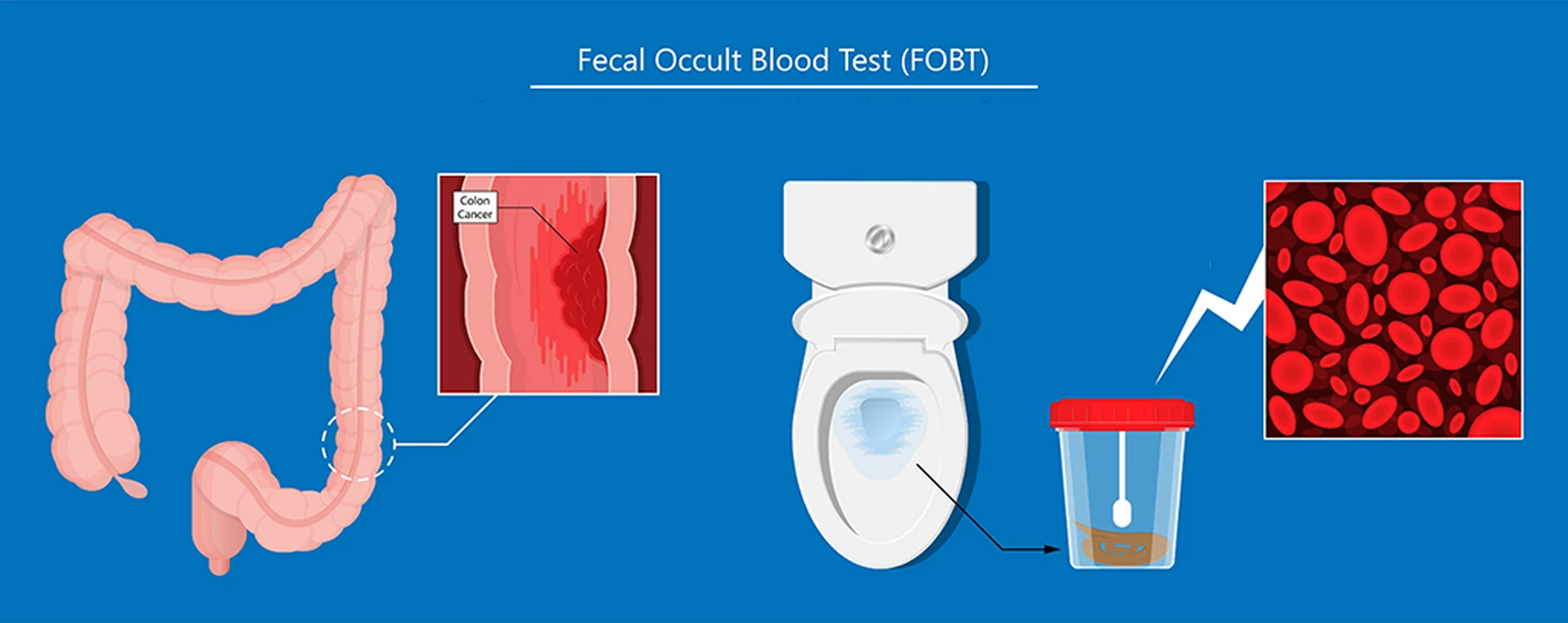
The FOB test, or fecal occult blood test, is a diagnostic method designed to detect very small amounts of blood in stool that are not visible to the naked eye. This blood may indicate bleeding in any part of the gastrointestinal tract, from the mouth to the large intestine. The primary importance of this test lies in the early screening and diagnosis of conditions such as colorectal cancer, intestinal polyps, inflammatory bowel diseases, gastrointestinal ulcers, and other gastrointestinal abnormalities.
This test is performed using two methods: guaiac (gFOBT) and immunochemical (FIT or iFOBT). The guaiac method uses a chemical reaction to detect the “heme” portion of blood hemoglobin. This method requires dietary and medicinal restrictions.
In contrast, the iFOBT uses specific antibodies to identify globin (a part of human hemoglobin). This method has higher sensitivity and accuracy and does not require dietary restrictions; therefore, it is currently recommended as the preferred method for colorectal cancer screening. For the test, stool samples are usually collected at several different times, as bleeding from polyps or tumors can be intermittent. This test is particularly recommended for individuals over 50, the elderly, or those with a family history of colorectal cancer as part of screening programs.
What Information Does the FOB Test Provide?
The fecal occult blood test can indicate abnormal bleeding in parts of the gastrointestinal tract. This can occur for various reasons, including:
- Anemia: A reduction in the number of healthy red blood cells in the body.
- Colitis: Inflammation or irritation of the large intestine wall.
- Colon or Rectal Cancer: The growth of malignant tumors in the lower parts of the digestive system.
- Diverticulosis: The formation of small, bulging pouches in the intestinal wall.
- Hemorrhoids: Swollen blood vessels in the anal or rectal area.
- Intestinal Polyps: Abnormal tissue growths on the intestinal wall that may become malignant over time.
- Gastrointestinal Ulcers: Sores in the stomach, small intestine, or other parts of the digestive system.
Advantages of the FOB Test
The fecal occult blood test plays a significant role in the screening and early diagnosis of many gastrointestinal diseases, especially colorectal cancer. Some benefits of colorectal cancer screening include:
An Effective Tool for Colorectal Cancer Screening
One of the main advantages of the FOB (FIT) test is its use in detecting colorectal cancer. Studies have shown that annual testing can reduce mortality from colorectal cancer, especially when combined with episodic colonoscopy and sigmoidoscopy.
Non-Invasive and Easy to Perform
Unlike invasive methods like colonoscopy, the FOB (FIT) test is a completely non-invasive method that requires no anesthesia or complex preparation. Sample collection is usually done at home by the patient and involves collecting a small amount of stool on three separate occasions. This feature makes patients more willing to undergo the test, leading to higher acceptance in the community. This method is also suitable for older individuals or those who cannot undergo invasive procedures.
Cost-Effective
The fecal occult blood test is significantly less expensive than other diagnostic methods such as colonoscopy or advanced imaging. This feature makes it feasible as a widespread screening method at the community level. In many countries, this test is provided free or at a very low cost to high-risk groups, which makes access to screening services possible for various segments of society.
Early Detection of Diseases Before Symptoms Appear
A characteristic of all rapid diagnostic kits is the detection of diseases in very early stages before clinical symptoms appear. Many gastrointestinal diseases, such as polyps, cancers, or inflammatory bowel diseases, may only cause microscopic bleeding in their early stages, which can be detected by this test. Early detection of these diseases can lead to more effective treatment and improved patient prognosis.
Identification of a Wide Range of Gastrointestinal Diseases
Although the FOBT (FIT) test is primarily used for colorectal cancer screening, it can indicate the presence of bleeding in any part of the gastrointestinal tract. This test can be useful in diagnosing numerous conditions, including:
- Large intestinal polyps
- Hemorrhoids
- Diverticulosis (formation of small pouches on the intestinal lining)
- Colitis (inflammation of the large intestine)
- Gastrointestinal ulcers
- Hemolytic anemia
- Celiac disease
Home Sample Collection and Reduced Hospital Visits
Patients can collect samples at home and then deliver them to the laboratory. This feature is particularly useful during epidemics or for individuals with limited access to healthcare facilities. It also reduces the burden of visits to medical centers and saves time for patients and healthcare staff.
Limitations of the FOB Test
Despite all the advantages of the fecal occult blood (FOB) test, it has some limitations, which we will examine below:
Medication Limitations
Generally, there’s no need to stop taking non-steroidal anti-inflammatory drugs (NSAIDs) like aspirin, ibuprofen, naproxen, corticosteroids, etc., for this test. However, since these medications can cause mild irritation or ulcers in the intestinal lining, they might sometimes lead to minor bleeding and thus a false positive result. The patient should inform their doctor and the lab about any medications they are taking.
Individual Condition Limitations
Women should not perform this test for three days before and after their menstrual period ends, as menstrual blood can interfere with test results. Also, excessive consumption of alcohol, aspirin, and vasodilators may irritate the gastrointestinal tract and lead to bleeding.
What Precautions Are Necessary Before the Fecal Occult Blood Test (FOBT)?
Given that the FOB (FIT) test, unlike the guaiac test, is sensitive to human hemoglobin and reacts only in its presence, there are no specific dietary or medicinal restrictions. However, before performing a fecal occult blood test (FOBT), it’s best to consult your doctor about the details of the test and its specific conditions. Your doctor can provide precise guidance to increase the accuracy of the test results.
Which Test Should You Use?
If you plan to use a fecal occult blood rapid diagnostic kit, the FOB Rapid Test Gold Medi Test Plus is one of the best rapid and qualitative tests for detecting occult blood in stool. This test can identify human hemoglobin in stool samples. This method has higher sensitivity and accuracy compared to older tests and is commonly used for screening gastrointestinal cancers and other bleeding-related gastrointestinal conditions.
Here’s how to perform the stool test:
- Use a clean, dry container to collect the stool. The sample must be free of urine or water.
- Using the applicator, take a small amount of stool (about 2 to 5 mg). Dissolve the sample in the solution provided with the kit and mix well until it is uniform.
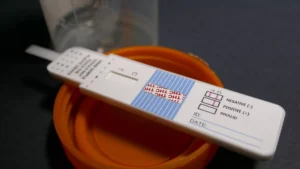
- Remove the test cassette from its pouch and place it on a flat surface. Then, open the dropper cap of the vial and dispense 2 to 3 drops of the sample suspension into the sample well (S).
- Set a timer for 5 minutes.
- The appearance of two lines in the test line (T) and the control line (C) indicates the presence of occult blood in the stool, meaning a positive result. The appearance of only the control line (C) indicates a negative result.
You can visit the Arya Mabna Tashkhis website to purchase this and other rapid diagnostic tests and contact their sales experts.
Summary
The results of a fecal occult blood test, whether positive or negative, are a starting point for further action. A positive result does not necessarily mean cancer but indicates the need for follow-up with more accurate methods like colonoscopy. On the other hand, a negative result does not definitively rule out a problem, as some polyps or tumors may not bleed. The importance of this test lies in its simplicity, low cost, and ability to be repeated annually for continuous health monitoring. Combining it with medical recommendations and paying attention to warning signs such as changes in bowel habits or abdominal pain provides a powerful tool for timely prevention and treatment.
Frequently Asked Questions
Does the FOB test replace colonoscopy?
No. The FOB test is an initial screening method, and if positive, colonoscopy is recommended as a definitive diagnostic method. Colonoscopy allows direct visualization of the intestine and sample collection.
Is the FOB test also useful for children?
Yes, but it’s typically used to diagnose gastrointestinal bleeding caused by infections, allergies, or inflammatory bowel diseases, not for cancer screening.
How often should the FOB test be repeated?
For individuals with an average risk of colorectal cancer, annual FOB (FIT) testing is recommended. High-risk individuals (such as those with a family history of cancer) may require colonoscopy.