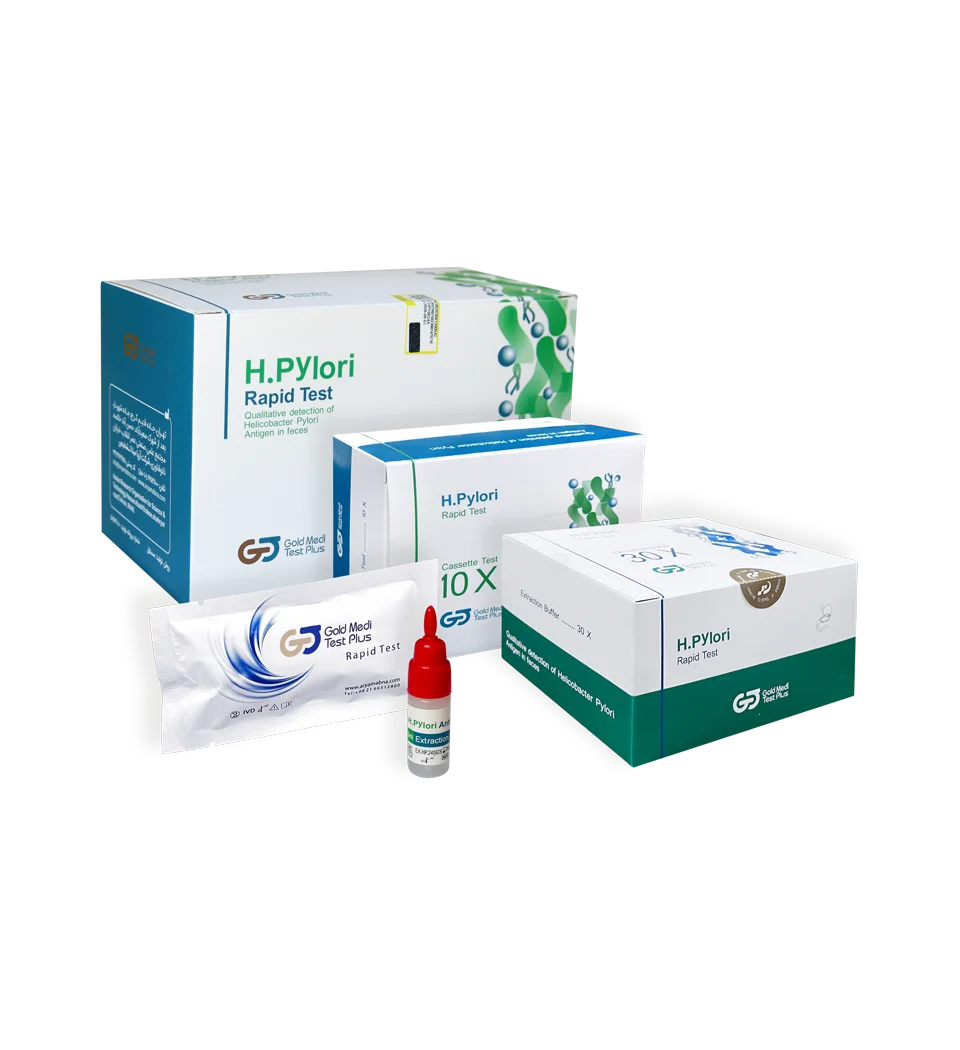
A rapid Helicobacter pylori detection kit is a safe and quick method for the qualitative detection of Helicobacter pylori antigen in human stool samples. This kit is designed based on the immunochromatography assay method and provides results in less than 10 minutes. The bacterium Helicobacter pylori is a causative agent of gastrointestinal diseases such as stomach ulcers, indigestion, and gastritis. Using the rapid Helicobacter pylori detection kit is very useful for checking treatment effectiveness or identifying active infections.
Applications of the Rapid Helicobacter pylori Detection Kit
This kit is used for identifying active Helicobacter pylori infections in patients exhibiting symptoms of gastrointestinal diseases. The rapid Helicobacter pylori detection kit is specifically used in gastroenterology clinics, diagnostic centers, and for monitoring treatment outcomes. Unlike serological methods that cannot differentiate current from past infections, this kit provides more accurate information about current infection by detecting bacterial antigens present in the stool sample.
How to Use the Rapid Helicobacter pylori Detection Kit
First, collect a stool sample in a clean container. The buffer provided in the kit is for sample dilution. Insert the applicator into three different points of the sample and mix it with the buffer. Then, dispense two drops of the prepared sample into the sample well (S). After 10 minutes, the result will be visible. The appearance of two colored lines (C and T) indicates a positive result, and one line in the control region (C) indicates a negative result. If the control line does not appear, the result is invalid, and the test must be repeated.
Precautions and Contraindications
Avoid using expired, damaged, or opened kits.
All stool samples should be considered infectious materials; therefore, observe safety precautions.
These kits are for single use and must be safely disposed of in a waste bin after use.
The temperature conditions of the test environment and sample must comply with the brochure’s standards.
Store the kit at 2 to 30 degrees Celsius, away from humidity and direct sunlight.
Avoid using expired, faulty, and previously used kits.
The test strip must be kept in its aluminum pouch until use. Use the test strip immediately after opening the aluminum pouch.
Always interpret results under appropriate lighting conditions to avoid errors during interpretation. Results read after 15 minutes are invalid.
If the aluminum pouch has been stored at 2 to 8 degrees Celsius (refrigerator temperature), allow it to sit at room temperature for at least 30 minutes before opening.
Keep the kit out of reach of children.
Obtaining correct results from this product depends on using the internal buffer of the kit. The company assumes no responsibility for incorrect results if unauthorized buffers are used.
In case of ingestion or eye contact with the buffer, necessary medical treatment is required.